

Many Calgary patients assume that losing a tooth or two is simply a cosmetic issue that can wait, or perhaps be ignored altogether if it is not visible when they smile. This misconception can prove costly, both financially and medically. The truth is that failing to replace missing teeth Calgary sets off a cascade of problems that extend far beyond appearance, affecting your oral health, overall wellbeing, and quality of life in ways you might not expect.
Whether you lost a tooth due to decay, injury, or extraction, understanding the consequences of missing teeth can help you make informed decisions about your dental care. The problems that develop are not just theoretical. They are well-documented, progressive, and often irreversible without intervention.
Key Consequences of Not Replacing Missing Teeth
- Bone loss missing teeth causes can reduce jaw height by up to 25 percent in the first year alone
- Remaining teeth shift into empty spaces, creating misalignment and bite problems
- Facial structure changes as bone deteriorates, leading to a prematurely aged appearance
- Difficulty chewing affects nutrition and overall health
- Speech problems develop as gaps alter tongue placement
- Risk of losing additional teeth increases significantly
- Dental implants benefits include preventing all these complications by preserving bone and function
The Hidden Danger: Bone Loss Missing Teeth Causes
Perhaps the most serious consequence of not replacing missing teeth is the bone loss that begins almost immediately after tooth loss. Your jawbone requires stimulation from tooth roots to maintain its density and volume. When a tooth goes missing, that stimulation disappears, and your body begins resorbing the bone that once supported the tooth.
This bone loss missing teeth experience is not gradual or minor. Research shows that you can lose up to 25 percent of your bone width in the first year after tooth loss, and the deterioration continues throughout your lifetime. The consequences extend far beyond the immediate area. As the bone recedes, it undermines the support for neighboring teeth, increasing your risk of losing additional teeth over time.
For Calgary patients who wait years before seeking treatment, the bone loss can become so severe that even dental implants require additional procedures like bone grafting to rebuild sufficient structure for implant placement. This turns a straightforward solution into a more complex, time-consuming, and expensive process.
How Quickly Does Bone Loss Occur?
The timeline for bone deterioration varies by individual, but the pattern is consistent. The most rapid bone loss occurs in the first three to six months after tooth extraction or loss. During the first year, you lose significant width in the ridge where the tooth once sat. Over subsequent years, the bone continues to resorb vertically, reducing the overall height of your jaw.
This progressive deterioration explains why Calgary dentists emphasize the importance of replacing missing teeth promptly. The longer you wait, the more bone you lose, and the more limited your treatment options become.
Shifting Teeth and Bite Problems
Nature abhors a vacuum, and your mouth is no exception. When you lose a tooth, the teeth on either side of the gap begin drifting toward the empty space. The tooth above or below the missing tooth also starts to extrude, moving into the space previously occupied by its opposing tooth during chewing.
This shifting creates a domino effect throughout your mouth. As teeth move out of their proper positions, your bite becomes misaligned. You may notice that your jaw clicks when you chew, or you develop pain in your temporomandibular joint. The misalignment creates uneven pressure distribution across your remaining teeth, accelerating wear on some teeth while leaving others underutilized.
Calgary patients often report that these bite problems develop gradually over months or years, making it easy to dismiss the changes as normal aging. By the time the discomfort becomes significant enough to seek treatment, the misalignment has become entrenched, requiring orthodontic intervention before other restorative work can proceed.
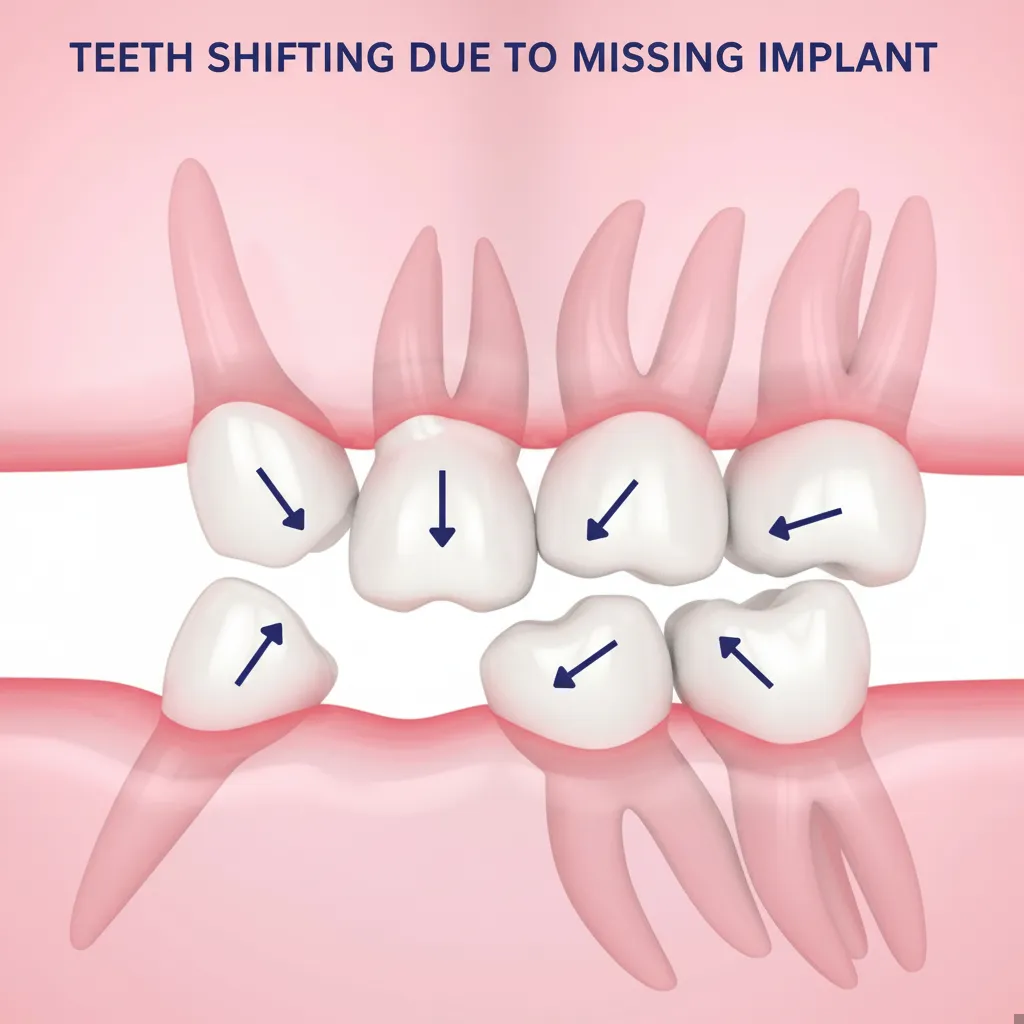
When a tooth is lost, neighbouring teeth drift into the gap while the opposing tooth extrudes, creating misalignment and bite problems.
Facial Structure Changes and Premature Aging
Your teeth and jawbone provide essential support for your facial structure. When bone loss missing teeth causes reduces the volume of your jaw, your face literally begins to collapse inward. The lower third of your face becomes shorter, your lips thin and turn inward, and deep wrinkles form around your mouth.
These changes create what dentists call facial collapse, giving you a prematurely aged appearance that no amount of skincare or cosmetics can correct. Calgary patients in their forties and fifties who have been missing teeth for years often look a decade or more older than their actual age due to these structural changes.
The transformation is particularly dramatic for patients missing multiple teeth or entire arches. Traditional dentures, while replacing the visible crowns of teeth, do nothing to prevent the underlying bone loss, which is why long-term denture wearers often struggle with loose-fitting appliances and an increasingly aged appearance.
The Nutritional Impact of Missing Teeth
Chewing is not just about convenience. It is essential for proper nutrition and digestion. When you are missing teeth, your ability to chew effectively diminishes significantly. Many Calgary patients unconsciously begin avoiding foods that require significant chewing, such as fresh fruits and vegetables, nuts, and lean meats.
This dietary shift has real health consequences. Studies show that people with missing teeth consume fewer nutrients, particularly proteins, fiber, and essential vitamins. Poor nutrition contributes to a host of systemic health problems, from weakened immune function to increased risk of chronic diseases.
Beyond nutrition, difficulty chewing affects your digestive system. Food that is not properly broken down in your mouth places additional burden on your stomach and intestines, potentially leading to digestive discomfort and reduced nutrient absorption.
Speech Changes and Social Confidence
Your teeth play a crucial role in speech production, particularly for sounds that require your tongue to contact your teeth or the roof of your mouth. Missing teeth, especially front teeth, can create whistling sounds, slurred speech, or difficulty pronouncing certain words clearly.
For many Calgary patients, the speech changes prove even more distressing than the cosmetic concerns. The inability to speak clearly affects professional interactions, social confidence, and overall quality of life. Some patients report avoiding social situations entirely, concerned about how they sound to others.
The psychological toll of missing teeth extends beyond speech. The visible gaps when you smile, the difficulty eating in public, and the self-consciousness about your appearance all contribute to reduced self-esteem and social withdrawal.
The Domino Effect: Losing More Teeth
Perhaps the most concerning consequence of missing teeth is that tooth loss tends to accelerate. The shifting, misalignment, and increased stress on remaining teeth create a perfect storm for additional problems. Teeth that have drifted out of position are harder to clean effectively, increasing the risk of decay and gum disease.
The altered bite places excessive force on certain teeth while others receive insufficient stimulation, weakening both groups through different mechanisms. Calgary dentists frequently see patients who lost one tooth years ago now facing the loss of several more teeth due to the cascading effects of that initial untreated loss.
This progressive nature of tooth loss underscores why early intervention matters so much. Replacing a single missing tooth is far simpler and less expensive than waiting until you need extensive reconstruction for multiple missing teeth.
Why Dental Implants Are the Gold Standard for Prevention
Among the various options for replacing missing teeth Calgary dentists offer, dental implants stand apart because they address the root cause of most complications: bone loss. Unlike bridges or dentures that rest on top of your gums, dental implants function like natural tooth roots, providing the stimulation your jawbone needs to maintain its density and volume.
The dental implants benefits extend across every consequence we have discussed. They prevent bone loss, maintain your facial structure, preserve the position of neighboring teeth, restore full chewing function, and feel completely natural. For Calgary patients concerned about the long-term health implications of missing teeth, implants offer the most comprehensive solution.
Whether you need a single tooth implant to replace one missing tooth or a full arch solution like All-on-4 dental implants for extensive tooth loss, the principle remains the same. Implants prevent the cascade of problems that follows tooth loss by preserving the biological foundation of your oral health.
How Implants Prevent Bone Loss
When a titanium implant is placed in your jawbone, it triggers a process called osseointegration where bone cells grow around and fuse with the implant surface. This creates a permanent anchor that functions exactly like a natural tooth root. The implant transmits chewing forces into the surrounding bone, providing the stimulation necessary to maintain bone density.
Studies tracking patients over 20-plus years show that bone levels around properly maintained dental implants remain stable, while bone continues deteriorating in areas where teeth are missing or replaced with traditional options that do not address bone preservation.
Comparing Your Options for Replacing Missing Teeth
While dental implants offer the most comprehensive benefits, understanding all your options helps you make an informed decision. Traditional bridges can fill gaps by anchoring to adjacent teeth, but they require grinding down healthy teeth and do nothing to prevent bone loss under the missing tooth.
Partial or complete dentures replace the visible portions of missing teeth and restore some chewing ability, but they rest on your gums without providing any stimulation to the underlying bone. This is why denture wearers experience ongoing bone loss, requiring frequent adjustments and eventual replacement as their jawbone changes shape. Our detailed comparison of dental implants versus dentures explores these differences in depth.
For Calgary patients missing all their teeth in an arch, snap-on dentures supported by implants offer a middle ground, providing better stability than traditional dentures while still allowing removal for cleaning. However, full fixed solutions like full mouth restoration provide the ultimate in function and bone preservation.
The Cost of Waiting: Why Timing Matters
Many Calgary patients delay treatment for missing teeth due to cost concerns, but this decision often backfires financially. The longer you wait, the more extensive and expensive your treatment becomes. A straightforward single implant today may require bone grafting in two years, adding time, discomfort, and several thousand dollars to the process.
For patients missing multiple teeth, the progression of problems often leads to losing additional teeth, turning a partial restoration into full arch reconstruction. When you factor in the health consequences, reduced quality of life, and eventual need for more extensive treatment, prompt action proves far more economical.
Calgary patients concerned about affordability should explore the financing options available for dental implants. Our guide to making dental implants affordable shows how manageable monthly payments make treatment accessible while you still have good bone structure and before additional problems develop.
Who Should Consider Replacing Missing Teeth?
The simple answer is everyone with missing teeth should at minimum have a consultation to understand their options and the timeline for bone loss. However, certain situations create additional urgency. If you have lost a front tooth, the visible gap affects your confidence daily while bone loss proceeds invisibly.
Patients missing molars may feel less urgency since the gap is not visible, but molars bear the greatest chewing forces and their loss creates the most significant functional problems. Missing multiple teeth or experiencing shifting in your remaining teeth signals that the cascade of complications has already begun.
Calgary patients with dentures who struggle with loose fit, difficulty chewing, or embarrassment about their appliances slipping should know that implant-supported solutions can restore stability and confidence. To determine if implants are right for you, read our guide on the best candidates for dental implants.
"I tell my Calgary patients that replacing a missing tooth is not cosmetic dentistry, it is preventative medicine. Every day that passes without that tooth, you lose bone you will never naturally regain, and your other teeth shift in ways that create new problems. The best time to replace a missing tooth was yesterday. The second best time is today." – Dr. Gregory Broyde, Smile Now Dental Implant Centre
Taking the Next Step: Your Path Forward
Understanding the consequences of missing teeth is the first step. Taking action is the next. If you are missing one or more teeth, schedule a consultation with a Calgary implant specialist to assess your current bone levels, discuss your options, and develop a treatment plan before additional complications develop.
Modern dental implant procedures have become remarkably predictable and comfortable. Many Calgary patients are surprised to learn they can receive teeth in a single day with immediate load implant protocols, walking out of their appointment with a complete, functional smile.
The technology, techniques, and materials available today make this an ideal time to replace missing teeth Calgary. Whether you lost teeth recently or years ago, whether you need to replace one tooth or rebuild your entire smile, solutions exist that can restore your oral health, preserve your facial structure, and give you back the confidence and function you deserve.
The question is not whether you can afford to replace missing teeth. The real question is whether you can afford not to. Every day of delay means more bone loss, more shifting, and more complications. The comprehensive benefits dental implants offer, from bone preservation to restored confidence, make them not just a treatment option but an investment in your long-term health and quality of life.
Don't Let Missing Teeth Compromise Your Health
Schedule a complimentary consultation with Calgary's trusted implant specialists to learn about your options before bone loss progresses further.
Book Your Free Consultation